

14 Plumbing Problems That Can Turn Into Major Repairs If Ignored
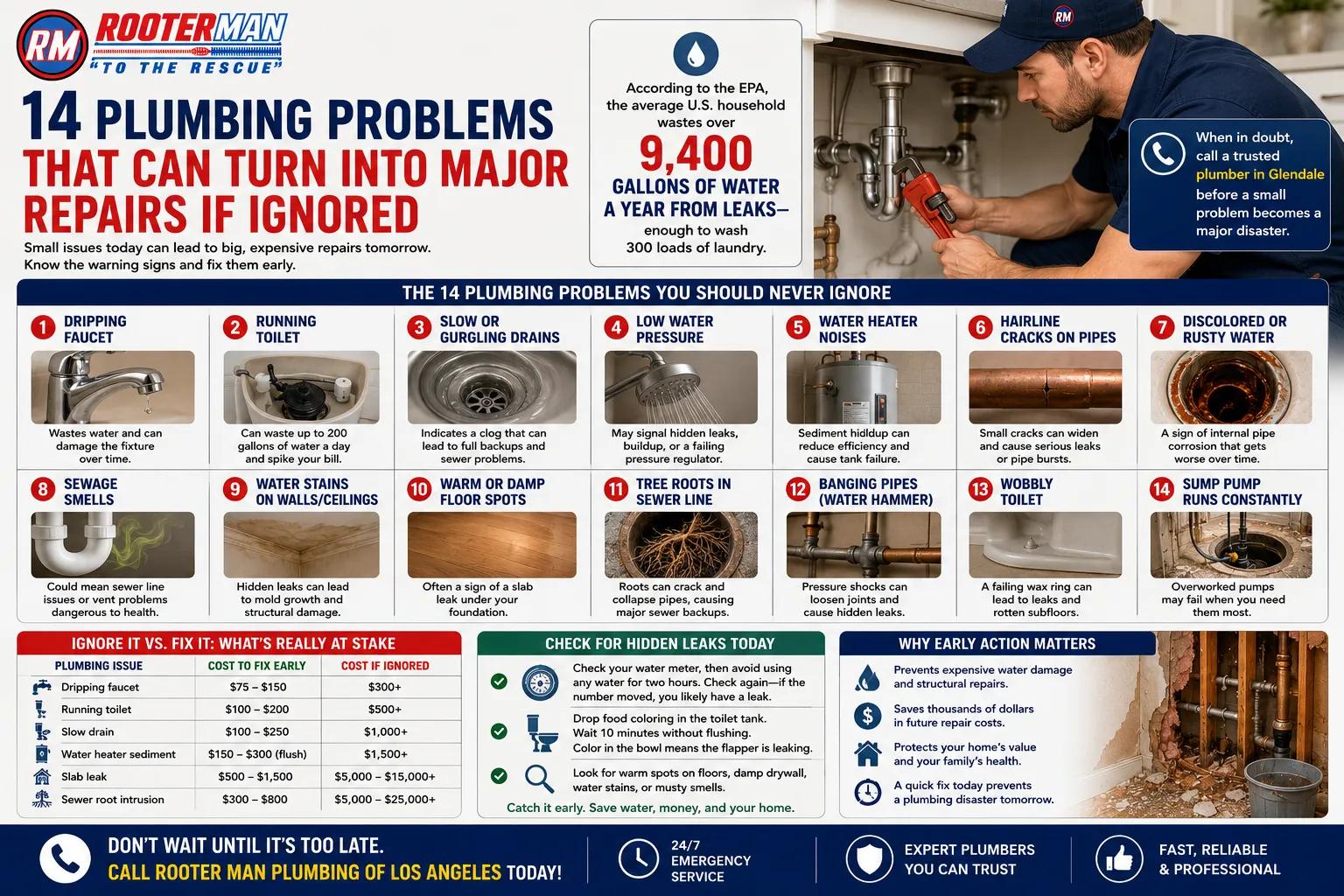
That slow drip under your sink might seem like nothing. But according to the EPA, the average U.S. household wastes over 9,400 gallons of water a year from leaks alone — enough to wash 300 loads of laundry. A small problem today can quietly turn into a five-figure repair bill tomorrow. That's exactly why homeowners call a trusted plumber in Glendale at the first sign of trouble instead of waiting for a full-blown emergency.
A "minor" plumbing issue is any small leak, clog, or noise that still lets your fixtures function. It becomes a major repair once it damages pipes, floors, walls, or your home's structure — and that shift can happen faster than most people expect.
Why Small Plumbing Issues Escalate So Quickly
Glendale has a mix of older homes from the 1920s through the 1960s, many still running on original galvanized steel or aging copper pipes. Add in California's hard water, mineral buildup, and shifting soil from seasonal dry spells, and you've got the perfect setup for slow, hidden failures.
Most homeowners don't fully understand why pipe damage happens until they're staring at a soggy ceiling. Corrosion, tree roots, water pressure spikes, and simple old age all chip away at your pipes over time. If you want the full breakdown, our detailed guide on why pipe damage happens walks through every major cause in plain English.
The good news: almost every plumbing disaster starts as a small, fixable warning sign. Catching it early — and having a licensed plumber take a look — is usually the difference between a $150 repair and a $15,000 one.
The 14 Plumbing Problems You Should Never Ignore
1. Why Is My Faucet Dripping Nonstop?
A dripping faucet usually means a worn washer or O-ring. Left alone, it can waste around 3,000 gallons a year and eventually damage the fixture itself, forcing a full replacement instead of a cheap part swap.
2. Why Does My Toilet Keep Running After I Flush?
A running toilet is almost always a failing flapper valve. It's a five-minute fix, but ignored long enough it can waste up to 200 gallons a day and quietly spike your water bill for months.
3. Why Are My Drains Slow or Making Gurgling Sounds?
Slow drains signal a partial blockage building up in your pipes. Gurgling means air is trapped behind the clog. Left untreated, that clog can turn into a full backup, sending wastewater back into your sink or tub.
4. Why Did My Water Pressure Suddenly Drop?
Low pressure across the whole house often points to a hidden leak, mineral buildup, or a failing pressure regulator. If it's isolated to one fixture, the problem is usually local — but either way, it rarely fixes itself.
5. Why Is My Water Heater Making Popping or Rumbling Noises?
That rumbling sound is sediment hardening at the bottom of the tank. It forces your heater to work harder, shortens its lifespan, and can eventually crack the tank, leading to a sudden flood in your garage or utility closet.
6. Why Do I See Hairline Cracks on Visible Pipes?
Think of a pipe like a garden hose left in the sun for years — it gets brittle. A hairline crack seems harmless, but water pressure will eventually widen it into a full split, often overnight.
7. Why Is My Tap Water Discolored or Rusty?
Rusty or brown water is a sign of internal pipe corrosion. It's not just unpleasant to look at — it means your pipes are deteriorating from the inside and are closer to a burst than they appear from the outside.
8. Why Does My House Smell Like Sewage?
A sewage smell usually means a dry P-trap, a vent pipe issue, or a crack in the sewer line itself. This isn't cosmetic — sewer gas exposure can affect indoor air quality and signals a line that needs professional inspection.
9. Why Do I Have Water Stains on My Ceiling or Walls?
A yellow-brown stain means water has been sitting behind your drywall for a while. By the time you can see it, mold growth and structural softening may have already started underneath.
10. Why Does One Spot on My Floor Feel Warm or Damp?
A warm patch on your floor, especially near the water heater, is a classic sign of a slab leak — a broken pipe under your home's foundation. These are notoriously expensive because reaching the pipe means cutting into concrete.
11. Why Do My Trees Keep Clogging My Sewer Line?
Tree roots are drawn to the moisture inside sewer pipes and will grow directly into small cracks, and older Glendale properties with mature landscaping are especially prone to this. Left alone, roots can collapse a pipe entirely, requiring full trenching or trenchless replacement.
12. Why Are My Pipes Making a Loud Bang When I Turn Off the Water?
That "bang" is water hammer — a pressure shockwave from water stopping too fast. Over time it loosens pipe joints and fittings, which can lead to slow leaks inside your walls.
13. Why Does My Toilet Wobble When I Sit Down?
A wobbly toilet usually means the wax ring seal underneath has failed. Every time it rocks, a small amount of water leaks onto the subfloor, which can rot the wood and require replacing the entire bathroom floor.
14. Why Does My Sump Pump Run Constantly?
A sump pump that never shuts off is either overworked by a high water table or failing mechanically. If it gives out during a storm, the flooding it was meant to prevent happens all at once.
Ignore It vs. Fix It: What's Really at Stake
Plumbing Issue | Cost to Fix Early | Cost If Ignored |
|---|---|---|
Dripping faucet | $75–$150 | $300+ (fixture replacement) |
Running toilet | $100–$200 | $500+ (water damage + higher bills) |
Slow drain | $100–$250 | $1,000+ (pipe replacement) |
Water heater sediment | $150–$300 (flush) | $1,500+ (full replacement + flood cleanup) |
Slab leak | $500–$1,500 (early detection) | $5,000–$15,000+ (foundation and flooring repair) |
Sewer root intrusion | $300–$800 (root cutting) | $5,000–$25,000+ (line replacement) |
The pattern is the same across the board: the earlier you catch it, the less it costs — in money, time, and stress.
A Simple Way to Check for Hidden Leaks Today
You don't need to be a plumber to catch some of these problems early. Try the same method the EPA recommends during its annual Fix a Leak Week:
Check your water meter, then avoid using any water for two hours.
Check the meter again — if the number moved, you likely have a hidden leak.
For toilets specifically, drop food coloring into the tank and wait 10 minutes without flushing. Color in the bowl means the flapper is leaking.
Walk your home and look for warm spots on flooring, damp drywall, or mineral rings around fixtures.
If any of these tests come back positive, it's time to call in a professional rather than waiting for the next sign.
Key Takeaways
Small plumbing problems rarely stay small — pressure, corrosion, and time work against you.
Older Glendale homes with galvanized or aging copper pipes are more vulnerable to hidden failures.
Water damage is now the second most common homeowners insurance claim nationwide, and it isn't cheap to fix.
A two-minute meter check or a food-coloring toilet test can catch leaks before they become disasters.
Calling a licensed plumber early almost always costs less than repairing the damage later.
Final Thoughts
Plumbing problems don't send a warning text before they turn into a real emergency — they just get louder, wetter, and more expensive the longer you wait. Every one of the 14 issues above starts as something small and manageable. The homeowners who avoid the big repair bills aren't the lucky ones; they're the ones who acted on the small signs instead of shrugging them off.
If something on this list sounds familiar, don't wait for it to get worse. A quick inspection now can save you thousands later.